Knife Sharpening Made Simple
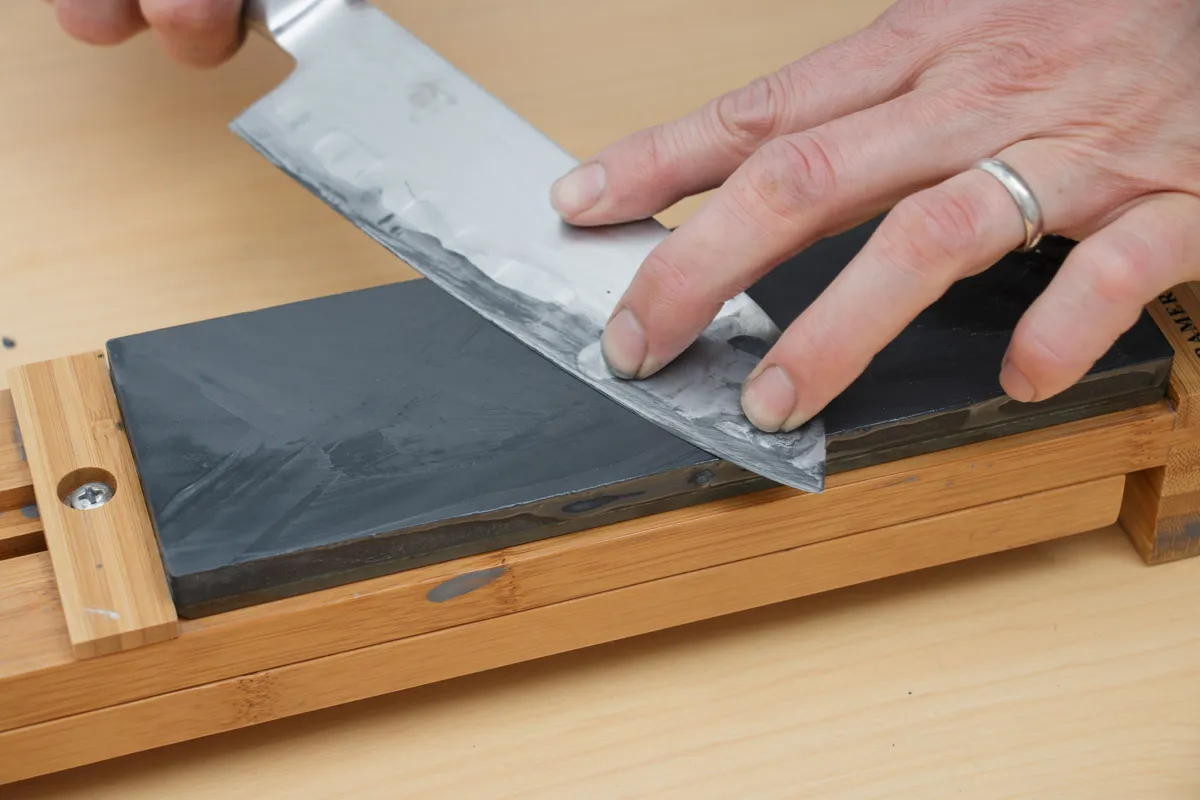
Most "dull" kitchen knives aren't worn out. Their edges are bent out of line, and a few strokes on a honing steel bring them back. When honing stops working, it's time to sharpen. That usually means once or twice a year for a home cook, according to Victorinox and Wüsthof.
Why bother? Wüsthof notes that a dull knife needs more pressure, which reduces control and raises the chance of a slip. A sharp knife is easier to control.
All guides
Best Knife Sharpener for Beginners: A Decision Guide
Which type of knife sharpener a beginner should buy, based on the knives you own, how much effort you'll put in, and what knife makers recommend.
Gift-Worthy Kitchen Knives Under $100: How to Choose
How to choose a kitchen knife as a gift on a budget: which shape, stamped or forged, Western or Japanese-style edges, and what to include with it.
How to Sharpen a Kitchen Knife (Whetstone, Pull-Through, and Steel)
Step-by-step instructions for honing and sharpening a kitchen knife with a steel, a pull-through sharpener, or a whetstone, from knife makers' published methods.
Sharpening Serrated Knives: When to DIY and When Not To
Why serrated knives stay useful longer, why most makers recommend professional sharpening, and how to touch up serrations carefully if you choose to.
Whetstone Grit Guide for Kitchen Knives
What coarse, medium, and fine whetstone grits do, which ones a home cook actually needs, and how to read a combination stone.
Whetstone vs. Pull-Through vs. Electric Sharpener
An honest comparison of the three main ways to sharpen kitchen knives: control, speed, learning curve, and which knives each suits.