Choosing Your First Knife Sharpener
Disclosure: This page contains affiliate links. If you buy through them we may earn a commission at no extra cost to you. As an Amazon Associate I earn from qualifying purchases. Details.
There's no single best sharpener. There's a best sharpener for you, and it depends on three things: what knives you own, how much time you'll actually spend, and whether you'd rather learn a skill or just get the job done. This guide walks through those questions using the instructions knife makers publish. We haven't lab-tested sharpeners, and we don't rank models by star ratings.
First: do you need a sharpener, or a honing steel?
Victorinox makes a distinction many people miss:
- Honing realigns an edge that has bent slightly with use. It removes little or no metal. Victorinox suggests honing every few uses.
- Sharpening grinds away a small amount of metal to make a new edge. Victorinox says that's needed about once or twice a year, or after heavy use.
If your knife cut well a few months ago and now feels dull, try a honing steel first. Wüsthof recommends a honing steel for regular maintenance and sharpening only when the edge needs a reset. Victorinox also points out that forged knives are harder and do best with a diamond, tungsten carbide, or ceramic honing rod, while softer stamped knives are easy to hone on a standard steel.
Ceramic honing rods → Amazon · Honing steels → Amazon
Test your edge first
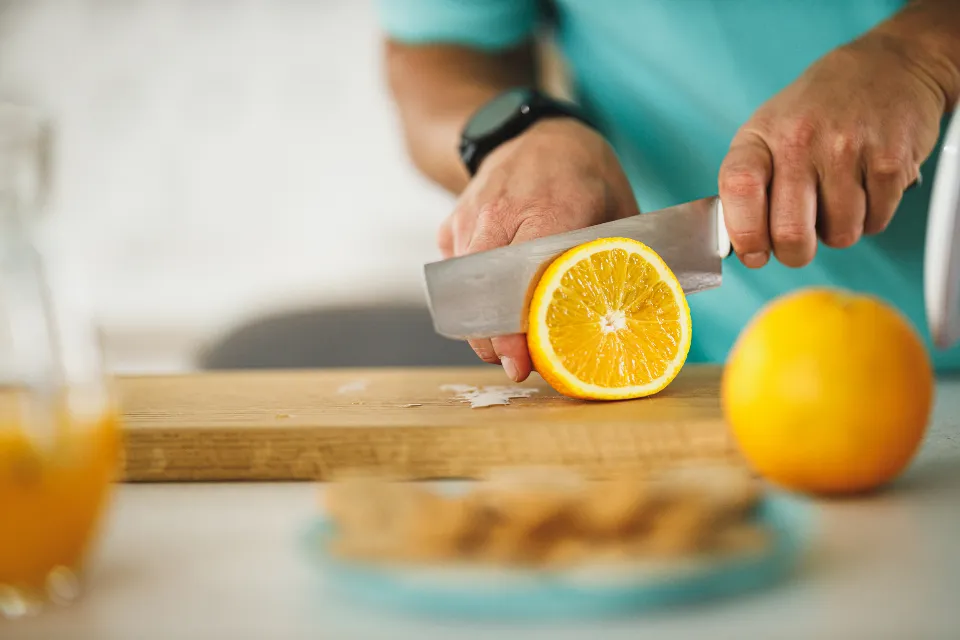
Victorinox suggests two quick tests. Slice a sheet of paper: if it tears or snags, the knife is dull. Or slice a tomato: a sharp knife glides through, and a dull one struggles. Hone, then repeat the test. If it still fails, sharpen.
The decision table
| If you... | Consider | Why |
|---|---|---|
| Want the fastest, simplest option | Manual pull-through with coarse and fine slots | Preset angle, no technique to learn |
| Sharpen many knives and want speed | Electric sharpener | Motorized, preset angles; check it supports your knives' angle |
| Want the best control and enjoy learning | Combination whetstone | You choose the angle; works on almost any straight edge |
| Own Japanese-style knives | Whetstone or a sharpener set for a narrower angle | Wüsthof lists 10° for its Asian-style blades vs. 14° for standard ones |
| Mostly own serrated knives | A professional service | Victorinox recommends professional sharpening for wavy blades for most people |
Match the angle to your knives
The angle matters more than the brand of sharpener. Wüsthof says to hold its standard knives at 14 degrees and its Asian-style knives at 10 degrees. Victorinox's honing instructions say to hold the knife at 20 degrees to the steel. Different makers grind edges differently, so look up your knife maker's guidance before you buy a preset-angle sharpener. A pull-through set at a wider angle will gradually change a narrower factory edge.
Our suggestions by situation
- "I just want my knives to work again." A two-stage manual sharpener, plus a honing rod. Wüsthof's tip: use the fine slot for regular honing and the coarse slot only once or twice a year. Two-stage sharpeners → Amazon
- "I have a drawer full of knives and no patience." An electric sharpener. Read the manual for which knife types and angles it supports. Electric sharpeners → Amazon
- "I want to learn properly." A combination whetstone with a non-slip base. Our step-by-step guide and grit guide will get you started. Combination whetstones → Amazon
- "I'd rather not do it myself." Look for a local sharpening service. Some knife makers also offer sharpening services; check your brand's website.
Beginner mistakes to avoid
- Pressing hard. Wüsthof warns that pressing down in a pull-through removes extra steel and can compromise the edge. Let the knife's weight do the work.
- Sawing back and forth. Wüsthof says to pull from heel to tip, never back and forth.
- Using the coarse stage every time. Coarse is for resetting a dull edge. Day to day, hone.
- Skipping the hone after sharpening. Victorinox recommends always honing after sharpening to align the fresh edge.
- Putting knives in the dishwasher afterward. Wüsthof's whetstone instructions end with rinsing and drying immediately.
Who should skip buying a sharpener
- You own one or two inexpensive knives and a local service is easy to reach.
- Your knives are mostly serrated.
- You won't hone regularly. A sharpener without a honing habit just means sharpening more often, and every sharpening removes metal.
FAQ
What's the easiest knife sharpener for a beginner?
A manual pull-through or an electric sharpener with preset angles is the easiest. Wüsthof notes both have pre-set angles that guide the knife. The trade-off is less control over the edge.
Do I need a honing steel too?
Yes, for most people. Victorinox says honing is what you'll do most often and recommends honing every few uses, with sharpening only once or twice a year.
Will a sharpener ruin my knives?
Any sharpening removes some metal. Victorinox says sharpening as needed at home won't wear a blade out quickly. Problems usually come from pressing too hard or using the coarse stage too often.
Related guides
- Whetstone vs. Pull-Through vs. Electric Sharpener
- How to Sharpen a Kitchen Knife (Whetstone, Pull-Through, and Steel)
- Whetstone Grit Guide for Kitchen Knives